A weekly field guide to the invisible forces shaping ambitious lives and leadership. Every Monday, explore the patterns shaping your energy, decisions, identity, performance, and how you lead...so you can see them, name them, and choose what happens next.
Protecting Potential: Who Told You That You Couldn’t?
|
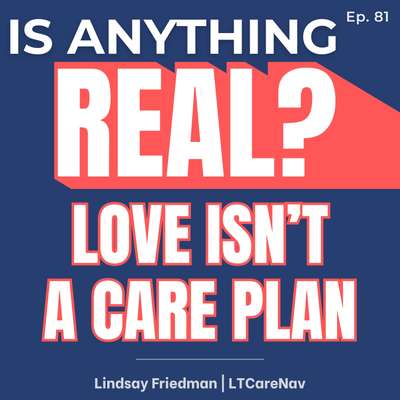
Please forward this to a high-impact leader who needs the energy edge. If this was forwarded to you, get plugged in here. Welcome back - it's nice to have you here! Before we dive in... “I’m not creative.” “I could never start a business.” “I’m not a writer.” “I’m terrible at public speaking.” “I’m not really leadership material.” We say things like this as if someone conducted an exhaustive assessment and handed us the results. But who actually decided? Hint: It might have started with someone else. But there’s a good chance you’re the one still saying it. 🎯 THE MOMENTHave you ever noticed how confidently we describe the things we can’t do? Not the things we tried and decided weren’t for us. The things we never really tested. “I could never do what you do.” “I’m just not that kind of person.” “I don’t have the background.” “I’m too old to start that now.” “I don’t have the natural talent.” Sometimes those statements are based on reality. But sometimes they’re rules. A teacher said something twenty years ago. A parent had a particular definition of success. A boss made us feel like we weren’t ready. Our education pointed us in one direction. Our career created evidence for one version of ourselves. Or maybe nobody explicitly told us anything. We just looked around at who seemed to belong and quietly concluded: That’s not for someone like me. Eventually the source of the rule stops mattering. Because something else happens. We start enforcing it ourselves. ⚡ QUICK SPINPotential has a strange problem. It exists before there’s much evidence for it. Which means we often look backward for proof of something that can only be discovered by moving forward. Have I done this before? Did I study this? Am I qualified? Was I naturally good at it? Would somebody else think I belong here? Those can be useful questions. But they can also lead us into a pretty efficient trap: We mistake the absence of qualification for the absence of potential. Qualification tells you something about the evidence you’ve accumulated so far. Potential asks what might become possible if you actually participate. Those are not the same thing. 🛠️ MY TURNI’ve done this more times than I realized. Music is probably the easiest example. I’ve loved music for most of my life. Deeply. And if video cameras had been as omnipresent in 1987 as they are now, somewhere there would probably be footage of five-year-old me dancing around very enthusiastically to Michael Jackson’s Thriller. I’m simultaneously grateful that footage doesn’t exist...and a little disappointed. 😂 Because it would be pretty good evidence of just how deeply music has always lived inside me. But somewhere along the way, I absorbed a pretty simple idea: Making music requires natural talent. Real talent. The kind you discover young. I didn't think I had it. So I became the fan. Maybe that was exactly the right path for me. But what interests me now is how little I ever questioned the premise. The same pattern showed up later in much bigger parts of my life. I spent twenty years in marketing. I had experience there. Credentials. Companies people recognized. A résumé that explained why I belonged. Then I started coaching. And I remember wrestling with a question that sounds almost ridiculous now: What gives me the right to call myself a coach? Who gave me permission? The answer, eventually, was pretty simple. Nobody. I had to. The same was true when I wrote a book. Started a podcast. Began writing this newsletter. Started speaking. Built EnergyOS. Moved deeper into the work I now call Transition Leadership. None of those things arrived because my previous identity perfectly qualified me for the next one. At some point, I had to stop asking my past for permission... ...and start creating evidence in the present. 📚 THE BACKUPThere’s a very important distinction here. I’m not arguing that qualifications don’t matter. Please don’t read this and attempt brain surgery because I told you to explore your potential. 😂 Some things require credentials. Training matters. Experience matters. Skill matters. Practice absolutely matters. But there’s a difference between respecting what something requires...and disqualifying yourself before you’ve even participated. Because that creates a loop: I don’t have evidence that I can do this. So I don’t try. Because I don’t try, I don’t develop capability. Because I don’t develop capability, I don't create new evidence. Then the absence of evidence becomes evidence. "See? I’m not someone who does that." That’s when potential becomes an identity problem. We stop saying: “I haven’t done that.” And start saying: “I’m not someone who does that.” Those sentences may sound similar. Here's your newsflash: They aren't. 🛠️ THE SYSTEMI don't think the answer is to test every possible version of yourself. That sounds exhausting. I could learn drums. Open a restaurant. Study astrophysics. Learn Japanese. Start five more companies. Become dangerously committed to pickleball. No, thank you. 😂 Potential is not obligation. Just because you could become something doesn't mean you should. You are allowed to decide something isn't for you. You are allowed to look at the cost and say no. You are allowed to release a possibility. But there is a meaningful difference between: “I chose not to pursue this.” and “I decided I couldn't before I ever found out.” So maybe the question isn't: "What potential am I failing to maximize?" Try something gentler. What possibility keeps asking for my attention? The idea that keeps coming back. The thing you keep wondering about. The part of yourself that occasionally pokes its head up and says: "Hey. Remember me?" Then pay attention to what happens next. What rule shows up to shut it down? 💡 THE SHIFTMaybe someone really did tell you that you couldn't. A parent. A teacher. A boss. A bad experience. An industry. A culture with strong opinions about what someone like you is supposed to do. Maybe nobody even said it out loud. Either way, I think there's a more useful question now: Who's still enforcing the rule? Because you don't have to figure out exactly where every rule came from before deciding whether it still deserves authority over your life. And you certainly don't need to replace every doubt with: "I CAN DO ANYTHING!" That's not how this works. Reality still gets a vote. That's actually the point. Give reality a chance to vote. Take the class. Write the page. Have the conversation. Sing the song. Apply. Make the thing. Try. Create enough contact with the possibility to learn something. You might discover you're good at it. You might discover you love something you're terrible at. You might discover the thing you've imagined for ten years is considerably less interesting once you actually do it. Good. That's information too. Potential isn't a promise about who you will become. It's permission to find out. 🧭 THE PERMISSION TESTWhen a possibility keeps returning, try this: What keeps asking for my attention? What idea, pursuit, role, activity, or version of yourself refuses to disappear completely? What am I using to disqualify myself? Age? Credentials? Background? Talent? Timing? Identity? Is the constraint real? Some are. But an inherited assumption and an actual constraint are not the same thing. What's the smallest honest test? Not quitting your job tomorrow. Not announcing your new identity to LinkedIn. What could you do that would simply create better information? Then: What did reality teach me? Potential doesn't become capability because you believe hard enough. It becomes capability through participation, feedback, practice, iteration, and choice. 🤗 YOUR TURNThere may be something you've already decided you aren't. Not because you tested it. Because somewhere along the way, you learned a rule about who gets to be that thing. So this week, ask yourself: What have I decided I can't become without ever giving myself a meaningful chance to find out? Then one more: Who is actually enforcing that rule today? You don't have to reinvent yourself by Friday. Just notice the answer. 👊 LET'S TALKOne of the things I've come to understand about transitions is that the new version of your life rarely arrives with credentials attached. Your previous identity has evidence. Your emerging one doesn't. Yet. That's part of what makes transition uncomfortable. When I left twenty years of marketing behind, I had a long list of evidence telling me who I had been. There was considerably less evidence for who I might become. That didn't mean the potential wasn't there. It meant the evidence for what came next hadn't been created yet. That's a big part of how I think about Transition Leadership today. Not pretending you can become anything because you want it badly enough. But also not allowing an old identity, inherited rule, or lack of evidence to automatically veto what might come next. You still have to participate. Learn. Practice. Get feedback. Build capability. Probably fail at something. Maybe look a little ridiculous. But at some point, you have to stop asking your past to provide evidence for a future that hasn't happened yet. The evidence for what comes next has to start somewhere. Cheers, Adam P.S. After using music as an example throughout this issue, I realize the obvious question is whether I’m finally going to learn an instrument. To be fair, I casually play guitar and have always been willing to pick up an instrument and mess around with it. I said I lacked natural talent. I never said I lacked curiosity. 😂 🔌 STAY PLUGGED INThere's another rule we enforce on ourselves that can be much harder to see: “I should be able to handle this.” That's why this week's Is Anything Real? conversation with Lindsay Friedman, founder of LTCareNav, feels like such a good companion to this essay. We talked about long-term care and caregiving, but underneath the practical decisions was a deeply human assumption: if you really love someone, you should be able to take care of them yourself. Except families aren't automatically trained to become experts in medical care, insurance, finances, transportation, provider quality, and family dynamics the moment someone they love needs help. Lindsay makes the case for thinking in terms of care partners, where the person receiving care matters and the person providing it matters too. Sometimes asking for help isn't evidence that you failed. Sometimes the rule telling you that you should be able to do everything yourself was the problem. And that feels pretty connected to today's question: What rule are you still enforcing because you stopped remembering it was a rule? Was this valuable? Hit reply with a ✅ or ❌. I read every one. |


🔌 Plugged In Leadership
A weekly field guide to the invisible forces shaping ambitious lives and leadership. Every Monday, explore the patterns shaping your energy, decisions, identity, performance, and how you lead...so you can see them, name them, and choose what happens next.
Please forward this to a high-impact leader who needs the energy edge. If this was forwarded to you, get plugged in here. Welcome back - it's nice to have you here! Before we dive in... Today, Monday, October 12th, is Indigenous Peoples’ Day. Normally, this is where I’d give you something to think about: an idea about leadership, energy, decisions, identity, or one of the invisible forces shaping how we operate. Today, I want to do something a little different. Instead of adding another...
Please forward this to a high-impact leader who needs the energy edge. If this was forwarded to you, get plugged in here. Welcome back - it's nice to have you here! Before we dive in... Sometimes you don’t need a better plan. You need to put yourself somewhere the plan can change. This one is a little different. Not because I’m changing what this newsletter is. Because I think I finally have better language for what it’s been becoming. And, strangely enough, it took a chalkboard at a concert...
Please forward this to a high-impact leader who needs the energy edge. If this was forwarded to you, get plugged in here. Welcome back - it's nice to have you here! Before we dive in... Ambitious people can be surprisingly good at being tired. Not collapsed. Not burned out. Not lying on the floor wondering how life came to this. Just...not fully back. You finish the hard week. Sleep a little longer. Maybe take Sunday off. Get outside. Squeeze in a workout. Have dinner with people you actually...